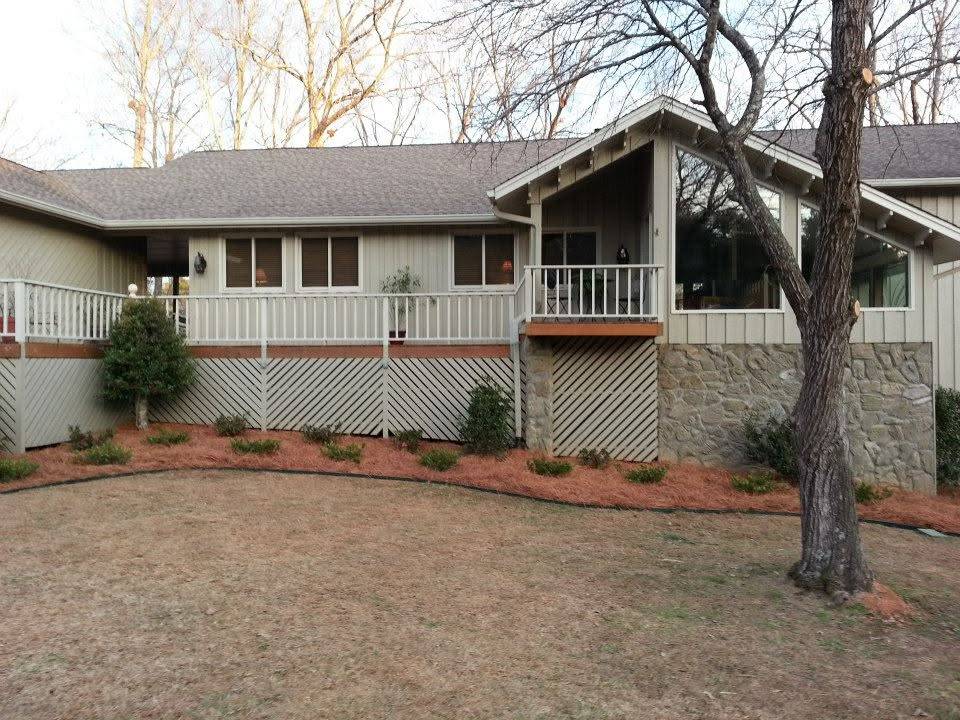
The clearest signs your yard needs grading show up after a hard rain. Water pools in the same low spots and stays there for a day or more. Water flows toward your house instead of away, or it cuts ruts as it runs. When you see these signs, the shape of the ground itself is usually the cause. Grading reshapes the soil so rain drains away from your home without washing your topsoil off.
Not every puddle means the whole yard needs work. Some water after a big storm is normal if it soaks in or drains off within hours. Red clay soil takes in water slowly, so it holds puddles longer than sandy soil. UGA Extension suggests a simple test: dig a hole, fill it with water and check it 24 hours later. If water is still standing, the soil drains poorly, and the surface needs a slope that carries rain away.
On many lots, grading trouble starts the year the house is built. Soil pushed back against new foundation walls slowly settles, leaving a dip where water should run off. Heavy machines used during building also pack the ground hard, so rain sits on top instead of soaking in. Years later, a new patio, shed or raised flower bed can block the path rain used to take.
Yard Drainage Problems That Point to a Grading Issue
Start your check at the house, since water near the foundation matters most. Building codes call for the ground to drop at least 6 inches within the first 10 feet. If the soil there is flat or tilts back toward the house, rain soaks in right along the foundation. Damp crawl spaces, wet basement walls and musty smells often trace back to this. A narrow dip along the walls is a common sign of that settling.
Next, walk the lawn slowly the day after a soaking storm. Soggy patches where grass thins out or moss grows show where water sits too long. Ruts and small gullies on a slope show where runoff moves fast enough to carry soil away. Bare red clay, exposed tree roots and mulch washed onto walks all point to the same thing. A yard that sheds water away from the house protects the foundation and lawn in every storm.
Gutters and Downspouts Can Mimic Grading Trouble
Before you blame the slope, check where your downspouts empty. A downspout that dumps water right at the wall can soak that corner, even on a well-graded lot. An extension or splash block that moves the water several feet out often solves that one spot. If the area stays wet after the water is moved, the ground itself likely needs reshaping.
- Puddles that sit in the same low spots a full day after the rain stops
- Soil next to the foundation that is level or tilts back toward the walls
- Ruts, gullies or bare clay where runoff cuts across a slope or flower bed
- Mulch, gravel or loose soil washed onto driveways, walks and patios after storms
What a Grading Contractor Checks Before Reshaping a Yard
A grading contractor starts by finding where the water comes from and where it can safely go. That means mapping the high and low points across the whole lot. It also means tracing roof runoff, driveway runoff and water flowing in from uphill land. The contractor checks how far the ground drops near the house and across the yard. Soil type matters too, since packed clay and loose fill behave very differently once they get wet.
These details decide how big the job is and what it involves. A single low spot near a walk may only need fill soil, shaping and new grass. Runoff across the whole yard may need a swale, a shallow, grassy ditch that steers water around the house. Packed clay may need to be loosened so rain and roots can soak in. Matching the fix to the cause keeps you from paying twice for the same problem.
- Where roof runoff, driveways and uphill land send water during a heavy storm
- How much the ground drops away from the foundation on every side of the house
- Whether the soil is packed clay, loose fill or topsoil that needs rework
- Where water can leave the lot safely without flowing onto a neighbor's yard or driveway
Why Waiting on a Grading Problem Usually Costs More
Grading problems rarely fix themselves, and most get worse with each storm. Water that sits by the foundation keeps soaking the soil that supports it. Small ruts on a slope grow into deeper gullies as more soil washes away with each rain. Lost topsoil also makes it harder for grass to grow back, so bare spots spread. Fixing the slope early is usually a smaller job than repairing washouts, dead lawn and wet crawl spaces.
Northeast Georgia land makes this more pressing. Much of the area sits on red clay that packs hard when dry and drains slowly when wet. Summer thunderstorms can drop heavy rain fast, and that is when weak spots show. Rolling hills also mean many lots take on runoff from higher ground, including roads and neighboring lots. A yard that seems fine during a dry spell can show every flaw after one heavy storm.
How to Watch Your Yard During a Heavy Rain
The best time to study your drainage is during or right after a heavy rain. Walk the yard in a rain jacket while water is still moving, and stay off slick slopes. Watch where the water flows, where it stops and where it carries soil. Take photos or a short video so you can show a contractor exactly what happens.
- Note which corners of the house stay wet the longest after the rain stops
- Mark low spots with a stake or flag so you can find them later
- Check crawl space or basement walls for damp spots the day after a storm
Does My Yard Need Grading or a Smaller Drainage Fix?
Your yard needs grading when the problem is the shape of the land itself. That includes soil that slopes toward the house, wide low areas and runoff that crosses the whole lot. A smaller fix may work when the trouble is one downspout or one sunken spot. If simple fixes fail and water still collects, have the ground looked at. Before any digging, Georgia law requires a call to Georgia 811 at least three business days ahead.
The signs are easy to spot once you know where and when to look. Rain should move away from your house, across the lawn and off the lot without taking soil along. When it pools, runs back toward the walls or cuts ruts, the ground is telling you something. Catching it early keeps the fix smaller, simpler and easier on your budget. It also protects your home, your lawn and the plantings you have worked to grow.
Get Your Yard's Drainage Checked Before the Next Big Storm
If you see these signs, Weather Tech Roofing can check your slope and grade your yard so rain drains away. Call us or request a free estimate to get started.